






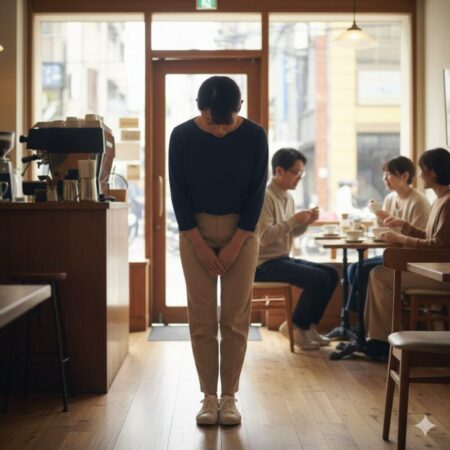
In Japanese culture, feelings and intentions are often communicated through posture and behavior rather than words. Bowing is a prime example of this, expressing respect, gratitude, apology, and humility without verbal explanation.
What matters is not simply lowering the head, but how deeply one bows and how long the posture is held. In this sense, bowing functions as a form of non-verbal grammar in Japanese society.
1
Bowing as “The Language of the Body”
2
The Meaning of Silence and “Ma”
The essence of bowing lies not in movement, but in the moment of stillness. Lowering the head, pausing briefly, and then returning upright — this pause is known as ma.
Rather than empty space, ma represents focused awareness and respect toward the other person. Bowing embodies the Japanese sense of time and presence through the body.
3
Adjusting Hierarchy and Social Distance
Relationships in Japanese society vary subtly depending on age, role, and context. Bowing does not emphasize superiority or inferiority, but instead helps adjust a comfortable and respectful distance between people.
Through who bows first and how deeply, social relationships are shared and understood without words.
4
Why People Bow Even When Unseen
Japanese people often bow while speaking on the phone, even though the other person cannot see them. This is not for display, but to align one’s own mindset.
By moving the body, respect and humility are internally reaffirmed. Bowing is both an action toward others and a way of organizing one’s inner attitude.
5
Conclusion: A Silent Form of Dialogue
Japanese people bow not out of habit, but to gently shape relationships and mutual understanding.
Bowing is a wordless form of communication that conveys respect, social distance, and inner attitude, embodying the Japanese pursuit of harmony.
CULTURE
Why Do Japanese People Line Up So Perfectly?
What Is Yokai?
Why Do Japanese People Bow So Often?
Why do Japanese people say “Itadakimasu”?
5 Fascinating Trivia about the Traditional Japanese Sport, “Sumo”
Why is Sleeping with Your Head to the North Bad? The Reason Lies in Old Japanese Folklore

Recommended Halloween Events for 2023