





Introduction: A Journey into Tranquility
Kyoto, the ancient capital of Japan, is renowned for its stunning temples, traditional teahouses, and, perhaps most captivatingly, its exquisite gardens. These aren’t just patches of green; they are meticulously crafted landscapes reflecting centuries of Japanese culture, philosophy, and artistry. More than mere visual delight, Kyoto gardens offer a profound connection to Zen Buddhism, providing a space for contemplation, meditation, and an appreciation for the beauty of impermanence. This guide will delve into the heart of Kyoto’s garden culture, exploring the design principles, historical significance, and spiritual essence that make these spaces so deeply evocative.
The Essence of Japanese Garden Design
Japanese gardens are meticulously planned to evoke natural landscapes in miniature. Key principles include:
- Miniaturization (Shukkei): Representing larger landscapes, like mountains or oceans, within a limited space.
- Borrowing Scenery (Shakkei): Incorporating distant views, such as mountains, into the garden’s composition, blurring the boundaries between the garden and its surroundings.
- Asymmetry (Fukinsei): Avoiding perfect symmetry to create a more natural and dynamic composition.
- Naturalness (Shizen): Emphasizing natural materials like rocks, moss, and water to create a sense of authenticity.
- Simplicity (Kanso): Stripping away unnecessary elements to reveal the essence of the landscape.
These principles, deeply rooted in Zen Buddhism, aim to create a serene and harmonious environment that encourages contemplation and inner peace. The careful placement of each stone, the gentle curve of a path, and the rustling of leaves in the wind all contribute to the overall experience of tranquility and mindfulness.
Zen Gardens: A Realm of Contemplation
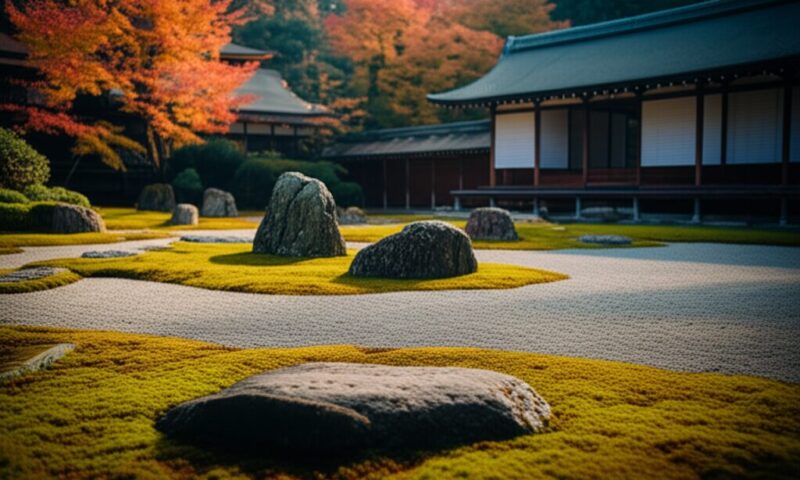
Zen gardens, also known as karesansui (dry landscape gardens), are a unique expression of Zen Buddhism. They typically consist of carefully raked gravel or sand, arranged around rocks and moss, representing islands, mountains, or even the vastness of the ocean. Water is often absent, its presence suggested by the patterns raked into the gravel. The most famous example is Ryoan-ji Temple.
Ryoan-ji Temple: The Enigmatic Rock Garden
Ryoan-ji’s rock garden is perhaps the most iconic Zen garden in the world. Fifteen rocks are arranged in five groups on a bed of white gravel, surrounded by a low earthen wall. The mystery lies in the fact that no matter where you stand, you can only see fourteen of the fifteen rocks at once. This has led to countless interpretations, ranging from representations of islands in the sea to abstract expressions of Zen philosophy. The garden’s stark simplicity invites viewers to engage in their own meditation and find their own meaning within its enigmatic arrangement.
Stroll Gardens: A Journey Through Nature
Stroll gardens (kaiyūshiki teien) are designed to be explored on foot, offering a changing panorama of landscapes as you wander along winding paths. These gardens often feature ponds, streams, hills, and bridges, creating a microcosm of the natural world. They are designed to provide moments of discovery and contemplation, encouraging a deeper connection with nature.
Kinkaku-ji (Golden Pavilion): A Reflection of Paradise
Kinkaku-ji, or the Golden Pavilion, is a Zen Buddhist temple covered in gold leaf, shimmering on the edge of a serene pond. The garden surrounding the pavilion is a classic example of a stroll garden, designed to showcase the pavilion’s beauty from every angle. The pond reflects the golden structure, creating a breathtaking scene that evokes images of paradise. The surrounding landscape is carefully manicured to complement the pavilion’s grandeur and create a sense of harmony and balance.
Shisen-do Temple: A Poet’s Retreat
Shisen-do, meaning “Hall of the Poet’s Retreat”, was originally built as a hermitage for Ishikawa Jozan, a samurai turned scholar and poet. The garden features a meticulously raked gravel courtyard, adorned with azaleas and maple trees, creating a tranquil setting for contemplation and reflection. The building itself is adorned with portraits of 36 Chinese poets, reflecting Jozan’s deep appreciation for literature and the arts. The garden is designed to evoke a sense of serenity and intellectual stimulation, offering a glimpse into the life of a refined scholar.
Visiting Kyoto’s Gardens: Tips for an Immersive Experience
To fully appreciate the beauty and tranquility of Kyoto’s gardens, consider the following tips:
- Visit during off-peak seasons: Spring (cherry blossom season) and autumn (foliage season) are popular times to visit, but the gardens can be crowded. Consider visiting during the shoulder seasons for a more peaceful experience.
- Allocate ample time: Don’t rush your visit. Allow yourself plenty of time to wander, observe, and contemplate.
- Engage your senses: Pay attention to the sounds of nature, the scents of the plants, and the textures of the stones.
- Practice mindfulness: Focus on the present moment and let go of distractions.
- Learn about the garden’s history and design: Understanding the context of the garden will deepen your appreciation.
- Respect the space: Maintain a quiet demeanor and avoid disturbing the tranquility of the garden.
The Enduring Legacy of Kyoto’s Gardens
Kyoto’s gardens are more than just beautiful landscapes; they are living embodiments of Japanese culture, history, and philosophy. They offer a glimpse into the Zen spirit and the Japanese aesthetic sensibility, providing a space for contemplation, reflection, and a deeper connection with nature. By visiting these gardens and understanding their underlying principles, you can gain a profound appreciation for the beauty and tranquility of Japanese culture and find a sense of peace and harmony within yourself. As you leave the serene spaces, consider carrying the principles of mindfulness and appreciation for beauty into your everyday life. The gardens of Kyoto provide a lasting lesson that can enrich your life long after you depart.